
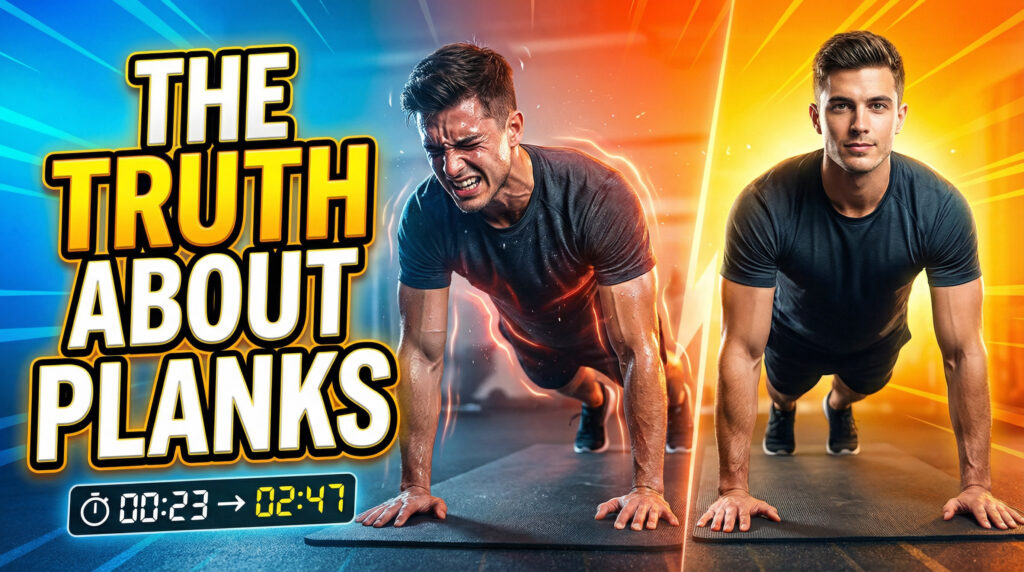
If you’ve ever tried holding a plank, you already know one thing—it feels longer than it actually is. A single minute can feel like five. That’s exactly why I decided to test my limits and document my 30 day plank challenge results.
Starting from just 23 seconds and ending at 247 seconds, the journey was not just about physical strength. Surprisingly, the biggest transformation happened in my mind, not my abs.
In this blog, we’ll break down what really happens during a 30-day plank challenge, what science says, and whether it’s actually worth your time.
📊 What Is a Plank and Why Is It Popular?
A plank is a simple isometric exercise where you hold your body in a straight line using your core, shoulders, and legs.
Unlike dynamic exercises, planks focus on holding tension, which builds endurance and stability.
💪 Benefits of Daily Plank Exercise
According to research from organizations like the National Institutes of Health (NIH) and fitness bodies:
- Improves core strength and stability
- Supports better posture
- May help reduce lower back discomfort
- Enhances balance and coordination
⏱️ My Starting Point: Day 1 Reality
On Day 1, I assumed I was in decent shape. But reality hit quickly.
- Starting time: 23 seconds
- Form breakdown started at: 18 seconds
👉 Key Lesson:
Your form breaks before you feel it.
To fix this, I made small adjustments:
- Used a mirror for posture correction
- Checked form every 10 seconds
- Focused on alignment (elbows under shoulders, straight spine)
📉 Week 1: The Reality Check
The first few days felt easy. I quickly improved from 23 seconds to around 45 seconds.
But then things got harder.
- Day 5: Quit early at 32 seconds
- Day 6: Reached 55 seconds, but struggled
😓 Why It Felt So Hard
As effort increases, your brain starts to perceive time more slowly.
This is supported by exercise psychology research showing that static exercises increase perceived effort, making them feel longer.
👉 This is where many people quit—not because of pain, but boredom and discomfort.
🧠 Week 2: Neural Adaptation Kicks In
By the second week, something changed.
I crossed the 1-minute mark, but interestingly:
👉 I wasn’t significantly stronger yet.
According to the NIH, early strength improvements are often due to neural adaptation—your brain learning how to use your muscles efficiently.
🔄 What Improved?
- Less shaking
- Better control
- More efficient movement
This phase is crucial for beginners doing a plank for core strength at home.
⏳ Why Planks Feel Longer Than They Are
One of the most surprising discoveries during my 30 day plank challenge results was how time felt distorted.
🧪 What Research Suggests
Studies show:
- Static holds increase mental fatigue
- Lack of movement makes you more aware of discomfort
- Your brain amplifies the feeling of effort
👉 That’s why a plank minute feels endless compared to running or lifting.
🔁 Week 3: Breaking the Boredom Barrier
Around Day 14–18, I hit a mental wall.
Not physical—mental.
To stay consistent, I added variety:
- Jump rope sessions before planks
- Light cardio between sets
⚡ Why This Helped
- Reduced boredom
- Maintained engagement
- Improved endurance
👉 Consistency matters more than intensity.
💪 Week 3 Progress: Real Gains
By Day 18:
- First 2-minute plank achieved
But new challenges appeared:
- Shoulder fatigue
- Tight hip flexors
🧩 Fixes That Worked
- Pressing forearms down
- Engaging shoulder stabilizers
- Adding hip flexor stretches
These adjustments improved my plank exercise for posture improvement.
📊 What Science Says About Plank Duration
Many people ask:
👉 How long should you hold a plank?
According to fitness experts and studies:
- 30 seconds to 2 minutes is effective
- Longer holds offer diminishing returns
📋 Quick Comparison Table
| Duration | Benefit Level |
|---|---|
| 20–30 sec | Beginner strength |
| 30–60 sec | Core endurance |
| 1–2 min | Optimal stability |
| 2+ min | Advanced endurance |
😩 Week 4: The Mental Battle
By Day 26, I didn’t want to continue.
No injury. No fatigue.
Just boredom.
👉 This is where most people quit.
🧠 Key Insight
You don’t need motivation every day.
You need a system you follow consistently.
🏁 Final Results: Day 30
Final test:
- Starting: 23 seconds
- Ending: 247 seconds
That’s over 7 times improvement.
🎯 What Actually Changed
✅ Better core stability
✅ Improved posture
✅ Increased endurance
✅ Stronger mental focus
❌ What Didn’t Change
- No visible abs
- No major muscle growth
👉 Important: Planks alone are not enough for fat loss or visible abs.
🧠 The Biggest Lesson
Planks are not just physical.
They are a mental challenge disguised as exercise.
Most people quit because:
- They get bored
- Time feels slow
- Discomfort builds
👉 Learning to stay calm under discomfort is the real benefit.
📌 Infographic Concept (For Your Blog)
Title: “30-Day Plank Progress Journey”
Include:
- Day 1 → 23 sec
- Week 2 → 1 min
- Week 3 → 2 min
- Day 30 → 247 sec
Visual icons:
- Brain 🧠 (mental strength)
- Core 💪 (stability)
- Timer ⏱️ (progress)
✅ Conclusion
The 30 day plank challenge results may not give you instant abs, but they can significantly improve your core strength, posture, and mental resilience.
If you’re planning to try it:
- Focus on form over time
- Stay consistent
- Add variety to avoid boredom
- Be patient with results
👉 Remember: Real progress is not just physical—it’s mental too.