
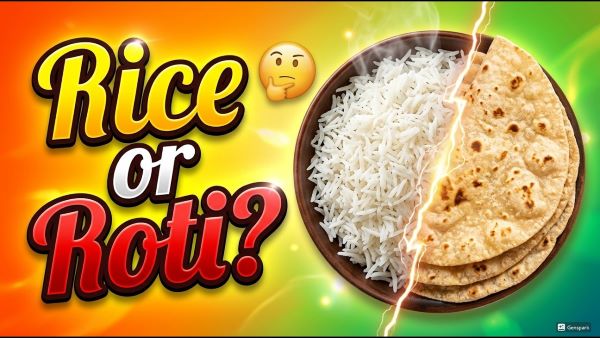
When it comes to diet and fitness, one of the most common questions people ask is: rice vs roti for weight loss — which is better?
Many people believe that eating rice leads to weight gain, while others think roti is always the healthier option. But is this really true? Or is it just a myth passed down over generations?
The reality is more balanced than you might expect. Both rice and roti are staple foods consumed by millions worldwide, and both can be part of a healthy diet.
In this detailed guide, we’ll explore:
- Nutritional differences
- Glycemic index and digestion
- Which option may support weight management
- Best ways to eat rice or roti
Let’s break down the facts in a simple and beginner-friendly way.

🍚🥖 Nutritional Comparison: Rice vs Roti
Understanding nutrition is the first step to making better food choices.
📊 Basic Nutritional Breakdown
| Nutrient | Roti (1 medium) | Rice (1 cup cooked) |
|---|---|---|
| Calories | 120–130 kcal | 100–110 kcal |
| Carbs | High | High |
| Protein | Moderate | Low |
| Fiber | Higher | Lower |
| Fat | Very low | Very low |
🧠 Key Observations
- Roti contains more fiber, especially if made from whole wheat
- Rice is easier to digest
- Roti provides slightly more protein and minerals
👉 According to global health guidelines (WHO), consuming whole grains may support better digestion and overall health due to higher fiber content.
⚖️ Rice vs Roti for Weight Loss
Let’s address the main concern:
❓ Does rice cause weight gain?
👉 The simple answer is: No single food causes weight gain on its own.
Weight gain usually happens when:
- You consume more calories than your body needs
- You have a sedentary lifestyle
💡 Important Insight
Whether you eat rice or roti, what matters most is:
- Total calorie intake
- Portion size
- Overall diet quality
👉 This means both rice and roti can fit into a weight management plan.
🔬 Understanding Carbohydrates
Carbohydrates are often misunderstood. Let’s simplify them.
🔹 Types of Carbs
- Complex Carbohydrates
- Found in whole wheat roti
- Digested slowly
- Provide steady energy
- Simple Carbohydrates
- Found in white rice
- Digested quickly
- Provide quick energy
📈 Glycemic Index: Why It Matters
The glycemic index (GI) measures how quickly a food raises blood sugar levels.
📊 GI Comparison
| Food | Glycemic Index |
|---|---|
| White Rice | High |
| Whole Wheat Roti | Moderate |
| Brown Rice | Lower |
🧠 What This Means
- High GI foods → faster sugar spikes
- Low GI foods → slower digestion and longer fullness
👉 According to research supported by NIH, lower GI foods may help in maintaining stable energy levels.
🌍 Real-World Example
Interestingly, many countries where rice is the main food still have populations with healthy weight levels.
Why?
Because they focus on:
- Balanced meals
- Smaller portions
- Active lifestyles
👉 This shows that rice itself is not the problem.
🥣 Best Way to Eat Rice or Roti
Now comes the most practical part.
✅ 1. Control Portion Size
- 1–2 rotis OR
- 1 small bowl of rice
👉 Avoid overeating, even if the food is healthy.
✅ 2. Combine with Protein
Add foods like:
- Lentils (dal)
- Eggs
- Chicken or tofu
👉 Protein helps you feel full longer.
✅ 3. Add Vegetables
Fill half your plate with vegetables.
Benefits:
- High fiber
- Low calories
- Supports digestion
✅ 4. Choose Better Options
- Brown rice instead of white rice (when possible)
- Multigrain or whole wheat roti
👉 These options provide more nutrients.
✅ 5. Maintain Balance
A balanced plate should include:
- Carbs (rice/roti)
- Protein
- Fiber (vegetables)
⚠️ Special Considerations
🩺 For People with Diabetes
- Limit high GI foods like white rice
- Prefer whole grains
- Monitor portion size
👉 Always consult a healthcare professional for personalized advice.
🧠 Final Verdict: Which Is Better?
Let’s simplify everything:
👉 Roti may have slightly more fiber and nutrients
👉 Rice is easier to digest and still healthy in moderation
✔️ The Truth
- Both are good
- Both can support weight management
- Neither is “bad”
🏁 Conclusion
So, when it comes to rice vs roti for weight loss, the real answer is not about choosing one over the other.
It’s about:
- Eating in moderation
- Maintaining a balanced diet
- Staying physically active
👉 Instead of asking “rice or roti?”, ask:
“Am I eating the right quantity and balance?”
That’s the key to long-term health.