
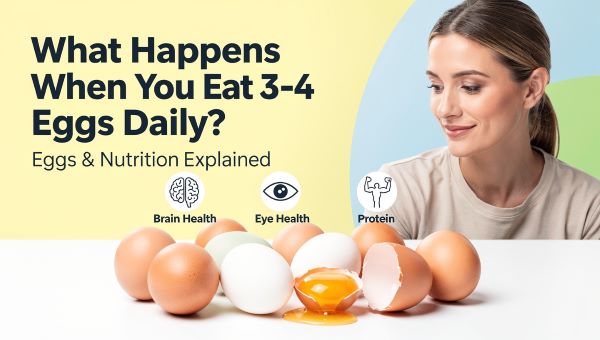
What Happens When You Eat 3 to 4 Eggs Daily

What Happens When You Eat 3 to 4 Eggs Daily?

Eggs are one of the most common foods in households around the world. But many people still ask the same question: what happens when you eat 3 to 4 eggs daily?
Some worry about cholesterol, while others praise eggs as a perfect protein.

In this blog, we will explore what research suggests about eating eggs daily, how eggs support nutrition, and what makes them different from other protein foods β€” all in simple, easy-to-understand language.

⚠️ Important Note:
This article is for educational purposes only. It does not provide medical advice. Individual health needs vary, so always consult a qualified healthcare professional before making dietary changes.

Why Eggs Are Considered a Unique Food

Eggs are not just another protein source. Unlike meat or fish, eggs are designed by nature to support complete growth. This is why nutrition scientists often study eggs as a reference food.

Egg Protein Has High Biological Value

Protein quality is measured by how well the body can absorb and use it. Eggs score very high on this scale.

Research cited by institutions like the National Institutes of Health (NIH) shows that egg protein:

  • Is easily digestible
  • Contains all essential amino acids
  • Supports tissue repair and maintenance

This is why eggs are often used as a comparison standard in protein studies.

What Happens When You Eat 3 to 4 Eggs Daily?

Eating 3 to 4 eggs daily may help support overall nutrition when included as part of a balanced diet. Eggs provide a combination of protein, healthy fats, vitamins, and minerals in one food.

Here’s what research suggests may happen:

  • Better intake of high-quality protein
  • Increased consumption of essential nutrients
  • Improved satiety compared to refined foods

This does not mean eggs guarantee health outcomes, but they can be a nutrient-dense option.

Eggs and Cholesterol: What Science Says

One of the biggest concerns around eggs is cholesterol. However, modern nutrition research gives more clarity.

Are Eggs Healthy According to Research?

Large population studies reviewed by organizations such as the WHO and NIH suggest that for most healthy individuals, dietary cholesterol from eggs does not significantly raise blood cholesterol levels.

Key points:

  • Blood cholesterol is influenced more by overall diet and lifestyle
  • Saturated and trans fats play a larger role than dietary cholesterol
  • Eggs can fit into a heart-conscious eating pattern

Egg Yolks: Nutrition You Should Not Ignore

Many people avoid egg yolks, but the yolk contains most of the egg’s nutrients.

Egg Yolk Nutrition Benefits

Egg yolks provide:

  • Choline – supports brain and liver function
  • Vitamin A (retinol) – supports immune and skin health
  • Vitamin D – important for bones and immunity
  • Vitamin B12 – supports nerves and blood health

Research shows that choline intake is often lower than recommended, and eggs are one of the richest natural sources.

Eggs, Energy, and Healthy Fats

Unlike very lean protein sources, eggs contain natural fats along with protein.

This combination:

  • Helps provide energy
  • Supports absorption of fat-soluble vitamins
  • Improves satisfaction after meals

This is one reason eggs are often included in balanced meals rather than eaten alone.

Eggs and Muscle Support

Eggs contain all essential amino acids, including leucine, which plays a role in muscle protein synthesis.

According to nutrition research:

  • Leucine helps maintain muscle mass
  • Egg protein supports muscle repair
  • Eggs are useful across age groups

This makes eggs a practical protein source for general nutrition.

Eggs and Eye Health

Egg yolks contain antioxidants called lutein and zeaxanthin.

How These Nutrients Help

Research referenced by the CDC and NIH suggests these antioxidants:

  • Accumulate in the retina
  • Help protect eyes from blue light
  • Support long-term vision health

These compounds are more easily absorbed from eggs than from many plant sources.

How to Eat Eggs for Better Nutrient Absorption

The way you eat eggs also matters.

Best Way to Eat Eggs Daily

Simple tips supported by nutrition research:

  • Pair eggs with vegetables (leafy greens, tomatoes)
  • Cook on low to medium heat
  • Avoid overcooking to protect nutrients
  • Use moderate amounts of olive oil or butter

Egg fats help absorb nutrients from vegetables, making meals more effective.

Does Egg Quality Matter?

Not all eggs are the same.

Common Egg Types

  • Caged eggs – lowest cost, limited movement
  • Cage-free eggs – more space, indoor systems
  • Pasture-raised eggs – outdoor access, varied diet

Studies suggest pasture-raised eggs may contain:

  • More omega-3 fats
  • Higher antioxidant levels

However, even regular eggs still provide valuable nutrition.

Can Everyone Eat 3 to 4 Eggs Daily?

Eggs are generally safe for most people, but individual needs differ.

Some people may need to:

  • Limit eggs due to specific medical conditions
  • Balance eggs with other protein sources
  • Follow personalized dietary advice

Always consult a healthcare professional for individual guidance.

Final Thoughts: Are Eggs Worth Including Daily?

So, what happens when you eat 3 to 4 eggs daily?
Research suggests eggs can be a nutrient-dense, affordable, and versatile food that supports general nutrition when eaten as part of a balanced diet.

They are not a cure or guarantee of health, but they offer:

  • High-quality protein
  • Essential vitamins and minerals
  • Natural fats for nutrient absorption

πŸ‘‰ Call to Action

If you found this guide helpful, consider sharing it or exploring more evidence-based nutrition content to make informed food choices.

Leave a comment