
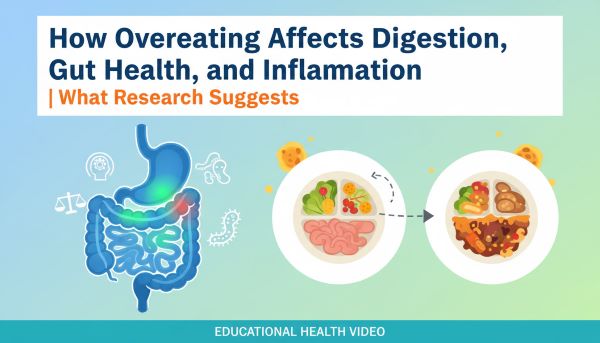
Most people today believe that eating healthy food automatically means good health. While food quality is important, research suggests that how much and how often we eat may play an equally important role. Many people consume nutritious meals but still experience bloating, acidity, fatigue, joint discomfort, or low mood.
Understanding how overeating affects digestion helps explain why this happens. Both ancient health systems like Ayurveda and modern medical research agree on one key idea: digestion decides how well your body functions. When digestion is overloaded, even the best food may not support health properly.
This blog explains, in simple language, how overeating influences digestion, gut health, inflammation, and even mental well-being—using a balanced view supported by scientific research.
Your Stomach Has a Natural Capacity
The stomach is not designed to keep stretching endlessly. It has a fixed working capacity, which allows food to mix with digestive enzymes and move forward smoothly.
Traditional health systems describe an ideal meal balance as:
- ⅓ solid food
- ⅓ liquids
- ⅓ empty space
Why is empty space important?
That space allows:
- Proper mixing of food
- Enzyme activity
- Smooth movement of digestion
- Reduced pressure and bloating
Modern research supports this idea. Studies referenced by the National Institutes of Health (NIH) show that overeating can slow gastric emptying. When food stays longer in the stomach, it may lead to discomfort, gas, acidity, and reduced nutrient absorption.
Eating More Does Not Mean Better Nutrition
Many people eat frequently throughout the day:
- Breakfast
- Mid-morning snacks
- Lunch
- Evening tea
- Dinner
- Late-night snacks
While this routine feels normal, digestion often does not get enough time to complete one cycle before more food arrives.
According to the World Health Organization (WHO), poor digestion and gut imbalance are linked with:
- Chronic inflammation
- Metabolic disturbances
- Weakened immune response
This shows that overeating and gut health are closely connected. Even nutrient-rich food can become a burden if digestion remains constantly overloaded.
What Happens When Food Is Not Fully Digested?
When digestion is incomplete, food remains in the gut longer than needed. This can cause:
- Fermentation
- Excess gas
- Mucus buildup
- Formation of toxic by-products
In Ayurveda, this undigested residue is described as Ama.
Modern science explains it as increased gut toxins and endotoxins that may enter the bloodstream.
Scientific perspective
NIH-supported studies show that poor gut health may lead to chronic low-grade inflammation, which plays a role in many long-term health conditions.
This highlights the strong digestion and inflammation connection seen in research today.
How Poor Digestion Affects Different Organs
Digestive imbalance does not stay limited to the stomach. Once inflammatory compounds circulate in the body, multiple systems may be affected.
Gut
- Irritable bowel symptoms
- Diarrhea or constipation
- Colitis-like discomfort
(Supported by NIH and Mayo Clinic research)
Joints
- Increased inflammation markers
- Stiffness or arthritis-like discomfort
Lungs
- Worsening of allergies
- Asthma-related symptoms
(WHO recognizes the gut–lung connection)
Heart
- Cholesterol imbalance
- Arterial inflammation
(Chronic inflammation is a known cardiovascular risk factor)
Brain
- Anxiety
- Low mood
- Reduced mental clarity
The gut brain axis explained by WHO and NIH confirms that gut health directly influences mental well-being.
Mental Overeating Is Often Ignored
Overeating is not limited to food. Today, people constantly consume:
- Social media
- News
- Screens
- Stressful information
- Mental pressure
This constant mental input overwhelms the nervous system.
According to WHO, chronic mental stress can:
- Disrupt digestion
- Alter hormone balance
- Disturb sleep cycles
Just like the stomach, the mind also needs digestive rest. This makes mental balance an important part of overall digestive health.
Your Body Already Knows How to Detox
The body has natural systems for waste removal:
- Urine
- Stool
- Sweat
- Liver and kidney filtration
NIH confirms that when digestion works properly, these systems function efficiently. Extreme detox plans or cleansing products are usually unnecessary for healthy individuals.
Instead, focus on:
- Eating within stomach capacity
- Allowing enough time between meals
- Practicing mindful eating for better digestion
Simple Habits That Support Digestion
You don’t need drastic changes. Small adjustments may support digestive balance:
- Eat slowly and without distractions
- Stop eating before feeling overly full
- Avoid constant snacking
- Reduce screen use during meals
- Manage daily stress levels
These habits help maintain stomach capacity and digestion efficiency over time.
Conclusion: Digestion Is the Missing Link
Many people eat healthy but still feel unhealthy. In many cases, digestion—not food quality alone—may be the missing link.
Understanding how overeating affects digestion helps explain why balance, timing, and quantity matter just as much as nutrition. When digestion works well, the body naturally supports gut health, inflammation control, energy levels, and mental clarity.
If this blog helped you understand digestion better, consider sharing it with someone who eats well but still struggles with discomfort. Supporting digestion may be one of the simplest steps toward better overall health.